
Feel free to add gre
Sofiechan Bookshelf.
anon_jopu said in #5218 7mo ago:
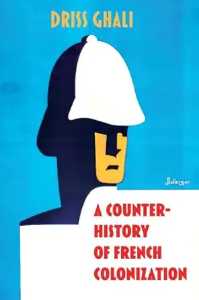
A Counter-History of French Colonization – Driss Ghali
It’s a 300-page historical survey and political essay that examines French colonialism from the 1830 conquest of Algiers through the post-WWII wave of decolonizations (covering North Africa, sub-Saharan Africa, Madagascar, and Indochina in comparative perspective).
Ghali tells a “tragic” story: despite frequent civilizing intentions (spreading French language, law, medicine, education, infrastructure, and ending practices like slavery and tribal warfare in many places), French colonial administration was often haphazard, ill-planned, under-resourced, and indifferent to both native welfare and France’s own long-term interests. He details military conquests, administrative experiments (e.g., Napoleon III’s federalist ideas, Lyautey’s protectorate model in Morocco), material achievements (disease control, minority protections, elite education), and real brutalities or failures (e.g., early Algerian violence, the Congo-Ocean railroad deaths). Pre-colonial societies are shown not as idyllic but often violent, slave-trading, or fragmented (e.g., Algiers as a corsair base, tribal warfare in the Maghreb and Africa).
It’s explicitly a counter-history: Ghali (a Sufi Muslim who loves France and whose own great-grandfather fought the French in Morocco) rejects both romantic pro-colonial hagiography and the dominant postcolonial “victim-oppressor” binary. He calls excessive “repentance” a “sickness of the soul” that erodes French national pride (gloire) without solving real problems.
Crucially, Ghali argues it wasn’t only a French failure: most former colonies (with exceptions like Vietnam’s relative success or Morocco’s middling outcome) squandered independence by reverting to pre-colonial patterns of corruption, authoritarianism, and stagnation—often under native elites who dismantled French legacies rather than building on them. This “double failure” reverberates today in metropolitan France, where colonial memory fuels division between “native-stock” and immigrant-descended populations, feeding resentment, identity politics, and social fracture.
as a Franco-Moroccan “subaltern voice” writing against fashionable ideology—this book is urgent precisely because France (and the broader West) has internalized a distorted, Manichean narrative of colonialism as the original sin. That narrative, he argues, isn’t just historically inaccurate; it’s politically toxic and self-destructive.
It’s a 300-page historical survey and political essay that examines French colonialism from the 1830 conquest of Algiers through the post-WWII wave of decolonizations (covering North Africa, sub-Saharan Africa, Madagascar, and Indochina in comparative perspective).
Ghali tells a “tragic” story: despite frequent civilizing intentions (spreading French language, law, medicine, education, infrastructure, and ending practices like slavery and tribal warfare in many places), French colonial administration was often haphazard, ill-planned, under-resourced, and indifferent to both native welfare and France’s own long-term interests. He details military conquests, administrative experiments (e.g., Napoleon III’s federalist ideas, Lyautey’s protectorate model in Morocco), material achievements (disease control, minority protections, elite education), and real brutalities or failures (e.g., early Algerian violence, the Congo-Ocean railroad deaths). Pre-colonial societies are shown not as idyllic but often violent, slave-trading, or fragmented (e.g., Algiers as a corsair base, tribal warfare in the Maghreb and Africa).
It’s explicitly a counter-history: Ghali (a Sufi Muslim who loves France and whose own great-grandfather fought the French in Morocco) rejects both romantic pro-colonial hagiography and the dominant postcolonial “victim-oppressor” binary. He calls excessive “repentance” a “sickness of the soul” that erodes French national pride (gloire) without solving real problems.
Crucially, Ghali argues it wasn’t only a French failure: most former colonies (with exceptions like Vietnam’s relative success or Morocco’s middling outcome) squandered independence by reverting to pre-colonial patterns of corruption, authoritarianism, and stagnation—often under native elites who dismantled French legacies rather than building on them. This “double failure” reverberates today in metropolitan France, where colonial memory fuels division between “native-stock” and immigrant-descended populations, feeding resentment, identity politics, and social fracture.
as a Franco-Moroccan “subaltern voice” writing against fashionable ideology—this book is urgent precisely because France (and the broader West) has internalized a distorted, Manichean narrative of colonialism as the original sin. That narrative, he argues, isn’t just historically inaccurate; it’s politically toxic and self-destructive.
A Counter-History of
anon_nafi said in #5222 7mo ago:
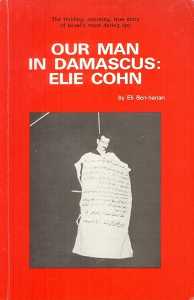
Our Man in Damascus: Elie Cohn – Eli Ben-Hanan
t’s a fast-paced, non-fiction account of Elie (Eliyahu) Cohen, one of Israel’s most celebrated spies. Born in Egypt, Cohen infiltrated Syria’s highest Ba’athist circles in the early 1960s under the alias Kamel Amin Thaabet—a wealthy Syrian businessman “returning” from Argentina. He befriended generals, ministers, and President Amin al-Hafez, gained access to military secrets (including Golan fortifications and Jordan River diversion plans), and passed critical intelligence to Israel that aided its 1967 Six-Day War victory. He was arrested in 1965, tortured, tried, and publicly hanged in Damascus—the execution was televised, with his body left dangling as a warning. Israel’s appeals and ransom offers failed.
From Ben-Hanan’s view (writing soon after the events as an Israeli journalist), the book is vital patriotic testimony. Cohen’s story must be remembered because it reveals the human courage and intelligence work behind Israel’s survival against existential threats.
In asymmetric war, one insider’s access outweighs armies. Cohen’s feats prove daring espionage saves lives and secures victory; forgetting this invites vulnerability.
t’s a fast-paced, non-fiction account of Elie (Eliyahu) Cohen, one of Israel’s most celebrated spies. Born in Egypt, Cohen infiltrated Syria’s highest Ba’athist circles in the early 1960s under the alias Kamel Amin Thaabet—a wealthy Syrian businessman “returning” from Argentina. He befriended generals, ministers, and President Amin al-Hafez, gained access to military secrets (including Golan fortifications and Jordan River diversion plans), and passed critical intelligence to Israel that aided its 1967 Six-Day War victory. He was arrested in 1965, tortured, tried, and publicly hanged in Damascus—the execution was televised, with his body left dangling as a warning. Israel’s appeals and ransom offers failed.
From Ben-Hanan’s view (writing soon after the events as an Israeli journalist), the book is vital patriotic testimony. Cohen’s story must be remembered because it reveals the human courage and intelligence work behind Israel’s survival against existential threats.
In asymmetric war, one insider’s access outweighs armies. Cohen’s feats prove daring espionage saves lives and secures victory; forgetting this invites vulnerability.
Our Man in Damascus: