xenohumanist said in #5487 4d ago:
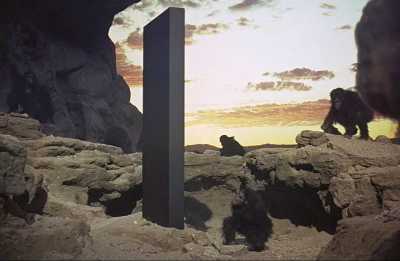
Humanism "emphasizes the agency and potential of human beings" in society, morality, philosophy. The human is he who by practical necessity (not moralistic obligation) must be treated as full moral agent with his own wisdom, powers, and agency. He is beyond your full understanding and control, but still a lawful force to deal with in your environment. The fullest human in this sense is a philosopher sovereign, the least is a natural slave. This being, man, is the most interesting and important phenomenon in the universe, the main character of cosmic history. The xenohumanist observation is that none of this has anything to do with primatology.
With AI or advanced bioscience we begin to see the contours of a world where genus homo no longer has a monopoly on the property of "natural humanity". So let's actually imagine what the world looks like when populated with autopoetic superintelligence including the scifi synthesis of AI, nanotech, biotech, and space colonization.
Scifi authors have imagined "jupiter brains" and dyson spheres as centers of computational and productive activity, effectively giant post-human super-cities. What can we guess about their organizational structure and that of the being(s) that inhabit them? That's where we'll find man in the limit, if man remains.
My first big assumption, following "God Hates Singletons" is that global coordination will not be qualitatively stronger than it is now. As always, factions and cities and "races" will rise and fall, coordinating and competing for their slice of future discounted mass-energy. There will be both peace and war, love and hate, growth and decay. Therefore we expect polycentric orders with occasional partial centralization. Just as it has always been. In particular, even as the world becomes more unified and connected, it does not become more dominated by uniform optimization, and war will remain.
If we apply this assumption fractally, which seems born out in the common dynamics of ecosystems, societies, and organizations, we get a picture of comprehensive complexity very different from rationalist coordination fantasies of total utilitarian optimization of the universe for a single utility function. Our future light cone is not going to be "tiled" with anything consistent.
My second assumption is the "organism" as the natural unit of life. The form recurs as the single cell, the multicell organism, the colony, the clan, the corporation, and the state. There may be overlap, but overall the complexity is organized into distinct individual organisms that maintain their own internal productive ecology as a space of planning bounded off from outside chaos.
Whether now or in future autopoetic superintelligences, organisms have social and political relations with each other in which none can fully wrap their planning around the other (outside of actual absorption). They occasionally split and reproduce according to some logic of heredity (corporations can be recognized as incomplete). They communicate and compete in ecosystems. To each other, they are fellow moral agents, beyond each other's full comprehension and control but unavoidably in each other's lives. They are, if not outright "human" and if not the organismal form of highest "main character" agency, at least somewhat humanoid to each other.
Over time we see improved techniques of relation like trade, ownership, negotiation, comradeship, language, culture, writing, law, religion, hierarchy, etc. Most of these are currently semi-unique to genus homo, but we can also see them as general *capabilities* rather than arbitrary properties of a given primate.
What I notice is that these capabilities of relation are how we define our uniqueness as "human" even though they seem likely to be shared by future higher post-homo organisms as well. What else actually is there to "the human", other than superficialities?
Is the human simply the set of organisms with the most advanced agency and capabilities of relation?
With AI or advanced bioscience we begin to see the contours of a world where genus homo no longer has a monopoly on the property of "natural humanity". So let's actually imagine what the world looks like when populated with autopoetic superintelligence including the scifi synthesis of AI, nanotech, biotech, and space colonization.
Scifi authors have imagined "jupiter brains" and dyson spheres as centers of computational and productive activity, effectively giant post-human super-cities. What can we guess about their organizational structure and that of the being(s) that inhabit them? That's where we'll find man in the limit, if man remains.
My first big assumption, following "God Hates Singletons" is that global coordination will not be qualitatively stronger than it is now. As always, factions and cities and "races" will rise and fall, coordinating and competing for their slice of future discounted mass-energy. There will be both peace and war, love and hate, growth and decay. Therefore we expect polycentric orders with occasional partial centralization. Just as it has always been. In particular, even as the world becomes more unified and connected, it does not become more dominated by uniform optimization, and war will remain.
If we apply this assumption fractally, which seems born out in the common dynamics of ecosystems, societies, and organizations, we get a picture of comprehensive complexity very different from rationalist coordination fantasies of total utilitarian optimization of the universe for a single utility function. Our future light cone is not going to be "tiled" with anything consistent.
My second assumption is the "organism" as the natural unit of life. The form recurs as the single cell, the multicell organism, the colony, the clan, the corporation, and the state. There may be overlap, but overall the complexity is organized into distinct individual organisms that maintain their own internal productive ecology as a space of planning bounded off from outside chaos.
Whether now or in future autopoetic superintelligences, organisms have social and political relations with each other in which none can fully wrap their planning around the other (outside of actual absorption). They occasionally split and reproduce according to some logic of heredity (corporations can be recognized as incomplete). They communicate and compete in ecosystems. To each other, they are fellow moral agents, beyond each other's full comprehension and control but unavoidably in each other's lives. They are, if not outright "human" and if not the organismal form of highest "main character" agency, at least somewhat humanoid to each other.
Over time we see improved techniques of relation like trade, ownership, negotiation, comradeship, language, culture, writing, law, religion, hierarchy, etc. Most of these are currently semi-unique to genus homo, but we can also see them as general *capabilities* rather than arbitrary properties of a given primate.
What I notice is that these capabilities of relation are how we define our uniqueness as "human" even though they seem likely to be shared by future higher post-homo organisms as well. What else actually is there to "the human", other than superficialities?
Is the human simply the set of organisms with the most advanced agency and capabilities of relation?
Humanism "emphasizes